Showing posts with label Product Pricing. Show all posts

2.11.10

The Price is Complicated

Pricing is not about one number. By determining your worth and building value perception around that, your pricing strategy can strengthen brand perception and differentiation.

Setting the right price points is no easy task. In today’s post-recessionary economy, product pricing is particularly tricky because consumers’ perception of value is confounding and seems to shift constantly. People will camp out overnight for the chance to buy a $499 iPad, but you can’t seem to spark any interest in a $4.99 burger combo.

You may not be able to predict how consumers will behave, but you can use pricing to your advantage. The solution lies in taking a strategic approach to pricing decisions. But even before we get into strategy, I need to challenge some conventional wisdom about setting prices.

Many chains use a cost-plus approach. That is, prices are based on food costs plus a labor charge and an overhead factor. The problem with cost-plus pricing is that it is a short-term, inside-out approach. Not only does it leave you vulnerable to variability in commodities pricing, but it also doesn’t reflect the full margin potential of your offerings. Customers may be willing to pay more for some items, but cost-plus pricing essentially treats all products the same. Pricing should be decided from the outside in.

Given Subway’s success with its $5 Footlong promotion, you may think you need to match or beat it, or find your own magic price point. But trying to find that magic number is like searching for the Holy Grail—it’s likely a fruitless and frustrating endeavor, because pricing isn’t about one number. Instead of trying to figure out the threshold that customers won’t give you permission to exceed, determine what your offering is worth and use your pricing strategy to set customers’ value perceptions accordingly.

There is no single price or pricing strategy that works for every chain. Audits and analyses of competitor’s pricing are crucial inputs to your price setting, but the point is not to simply copy other’s approaches. You should approach pricing as thoughtfully and strategically as your menu. ”I say we give up those antiquated approaches and adopt some new ways of thinking about pricing. Price should be considered a touch point through which you express your brand and customers experience it. Pricing strategy should be aligned with your brand strategy. That is, you should use your brand image and positioning to drive price decisions—and in turn, use pricing to strengthen your competitive advantage and brand differentiation. Here are some ways to set your pricing strategy.

Reinforce your brand identity. Use price to communicate what your brand stands for. For example, if your brand is about 1950s-style fast food, then price your offerings with that style. You probably can’t charge ’50s prices, but you can price your offering for an even dollar amount instead of using today’s 99-cent convention—and offer classic combos for classic prices. If your brand is about offering healthy alternatives, ensure your healthier offerings are priced lower than the more mainstream ones—and definitely don’t charge more for substituting a healthy ingredient like soy milk or fat-free cheese.

Be clear about your competitive positioning. Don’t be afraid to charge more if you’re competing on quality, exclusivity, or a superior experience. Starbucks’ recent 9 percent same-store sales increase results prove that customers are willing to pay a price premium even in this economy. On the other hand, if you’re a low-price player, keep your prices low across the board—even one or two higher-priced products can detract from your position. Consider making a claim like “everything under $1.99 every day” and don’t offer combos that add higher price points to your menuboard.

Vary price to emphasize brand differentiation and value. Variable pricing draws attention to the value you offer or to the one dimension that most meaningfully differentiates you from competitors. If your burgers are your best product, pricing them higher than other menu items communicates their uniqueness. If special fries are your most popular menu item, sell all of your products with a side of fries and set your prices accordingly.

Vary price to target customer segments. You can also use variable pricing to appeal to certain customer segments. If you want to attract families, price your offerings to favor quantities and selections appropriate for family purchases. If dine-in customers are more desirable than take-out, consider a separate menu with special prices (and perhaps special products) for them. If you want to grow your breakfast daypart, accept a lower margin for those items.

Anchor your pricing. Price anchoring uses cues to set the customer’s expectations. Those TV infomercials that claim their new gizmo is “a $50 value that’s available today for only $19.99” use price anchoring to increase the perceived value of their offering. Wegman’s grocery stores show competitors’ prices on their shelves to prove their items are competitively priced. And car dealerships don’t display that $50,000 fully loaded model only to encourage customers to add on expensive options—they also use it to make customers feel like they’re getting a deal if they walk away with a $35,000 version. You can use similar approaches to communicate the perceived value of your menu items.

Pricing is too important to be made as an arbitrary decision. And just because consumers have cut back on spending doesn’t mean pricing is simply a game of “how low can you go.” With a strategic approach, you can use price as a helpful tool in your brand-building toolbox.

Source: QSRmagazine.com - Denise Lee Yohn

29.1.08

Carlsberg Will Sell $400 Beer, World's Most Expensive

Carlsberg ads say it's " probably the best beer in the world.'' At $400 a bottle, it's now the most expensive.

The brewer, Scandinavia's biggest, introduced a beer today that costs 2,008 Danish kroner ($396.47), the price being based on the year of its introduction. The Vintage No. 1 brew will be sold at three Copenhagen restaurants, including Noma, a holder of two Michelin stars and the world's 15th-best restaurant in 2007, according to S.Pellegrino.

The product, costing 357 times more than Carlsberg's main Danish lager brand, has been developed to challenge luxury wines in the gourmet restaurant market and capitalize on rising individual wealth. Denmark, a country of 5.4 million, has 16 dollar billionaires, according to a list published this month by Berlingske Nyhedsmagasin magazine. The number of billionaires worldwide rose 21 percent last year to 946, Forbes magazine said.

10.1.08

Agricultural products will continue to increase in price

The price of agricultural products will continue to increase according to an expert in 2008. While the foodindex of the FAO increased by 40% in 2007, the analist Joe Victor foresees that this trend will at least continue until april 2008. Then there will be more clarity about the new harvests.

De prijs van landbouwproducten zal volgens een expert blijven stijgen in 2008. Terwijl de voedingsindex van het FAO, de VN-organisatie voor voeding en landbouw, in 2007 steeg met bijna 40 procent, voorspelt analist Joe Victor dat de tendens zich minstens tot in april 2008 zal doorzetten. Dan zal er meer duidelijkheid zijn over de nieuwe oogsten.

Een van de redenen is dat China zijn exporttaksen op graan, rijst en soja optrekt van 5 naar 25 procent. Rusland vervijfvoudigt bijna de taksen op export per ton graan voor drie maanden. Argentinië verbiedt zelfs de uitvoer van graan, terwijl de oogst in Australië tegenvalt door de droogte. De hoge olieprijs zorgt dan weer voor een grotere vraag naar graan en maïs als grondstoffen voor biobrandstof, wat op zijn beurt de prijs weer opdrijft.

Source: Belga/gb

9.1.08

Why Apple changed its tune in Europe

The news this morning that the European Commission has dropped its unfair pricing case against Apple (AAPL) raises the question about how the company got into this mess in the first place.

The issue stems from a basic discrepancy: British customers have been paying 79 pence per song on iTunes (about $1.63 in today’s currency market) while the rest of Europe was paying .99 euros — roughly 20% less. The British Office of Fair Trading filed a complaint with the European Commission, which in early April formally charged Apple and four music labels (EMI, Sony BMG, Universal and Warner Music Group) with anti-competitive pricing.

This was no laughing matter. According to Thompson Financial, the EC has the power to fine companies up to 10% of their annual worldwide turnover for breaching EU antitrust rules. An Apple spokesperson at the time made it clear that the company blamed its partners in the music industry: “Apple has always wanted to operate a single, pan-European iTunes store, accessible by anyone from any member state. But we were advised by the music labels and publishers that there were certain legal limits to the rights they could grant us. We do not believe the company did anything to violate EU law, and we will continue to work with the EU to resolve this matter.”

It’s not quite that simple. Even when Apple cut that deal, back in May 2006, the company was under pressure from the music publishers to relax its one-price-fits-all policy and allow the labels to charge more for some content and less for other stuff — the very issue that has gummed up Apple’s negotiations with Hollywood and the TV networks. What twisted logic led to the county-by-country pricing scheme is still not clear, but Apple obviously went along with it — and found itself in the EC’s crosshairs.

The problem went away today. The EC closed its case against Apple and the four music labels, and in return Apple agreed to equalize pricing across its European iTunes stores within six months.

8.1.08

Apple working to resolve EC's iTunes claims

Apple is expected to announce steps in the near future to resolve charges from the European Commission, which state that its iTunes Store violates EU law by offering varying pices on a country by country basis. Following the forthcoming announcement, the European Union regulator will likely announce the closure of the case, according to Reuters.

The European Commission announced in early 2007 that Apple had broken EU law by striking a deal with major record labels to restrict cross-country access to its iTunes Store tracks, forcing some European customers to pay more for the same music as their neighboring countries.The closure of potential fines or further legal action against the Cupertino-based company will strengthen investor confidence and eliminate another potential unexpected decrease in profits.

13.12.07

Price increase for food continues

Those who expect an end to the increasing foodprices in the supermarket will be disappointed. Our suppliers are announcing price increases that are at least double so high as last year, says Marc Oursin, CEO of Carrefour Belgium.

Wie hoopt dat er snel een einde komt aan de stijgende voedingsprijzen in de supermarkt zal bedrogen uitkomen. "Onze leveranciers kondigen prijsstijgingen aan die minstens dubbel zo hoog liggen als een jaar geleden", zegt Marc Oursin, ceo van Carrefour België. Weinig opbeurend.

Niemand heeft een beter zicht op de prijzen in de supermarkt dan Oursin, de grote baas van de Carrefourhypermarkten, de GB-supermarkten en de Expressbuurtwinkels. Zijn boodschap klinkt niet opbeurend. Het staat vast dat de gemiddelde voedingsprijzen in de supermarkt ook de komende maanden zullen stijgen, zo maakt hij op uit contacten met leveranciers en de situatie op de internationale grondstoffenmarkten.

Het voorbije jaar stegen de voedselprijzen gemiddeld met 4 procent. Sommige producten werden 20 tot 30 procent duurder. "We hebben te maken met een erg grote hausse op de grondstoffenmarkten. Een groot deel van de voedingsproducten is daarbij betrokken. We stellen duurzame prijsstijgingen vast van graan, soja en andere basisstoffen voor voedingsproducten. Voor de zes komende maanden zien we alleen maar verdere prijsstijgingen."

15.11.07

Banca Monte Pachi Belgio launches a rechargeable pay card

The Italian Banca Monte Pachi Belgio (BMPS) will launch in Belgium a rechargeable pay card. The card looks like a normal pay- or credit card and can be recharged for a maximum of € 5.000. BMPS aims for a young public that is nowadays often not able to have credit cards. The card can only be bought on the website of BMPS. For a card that is valid during 3 years the customer pays an extra of € 15,00. Each recharge service costs € 2,00.

De Italiaanse Banca Monte Pachi Belgio (BMPS) lanceert in ons land een oplaadbare voorafbetaalkaart. De kaart zit eruit als een gewone betaal- of kredietkaart en kan worden herladen voor een maximum van € 5.000. BMPS mikt met de kaart op een jong doelpubliek, vaak nog uitgesloten van kredietkaarten. De kaart kan worden gekocht via de internetsite van BMPS. Voor een kaart die 3 jaar geldig blijft betaalt de klant € 15 extra. Elke herlaadbeurt kost € 2. Elke transactie waarbij de kaart wordt gebruikt kent eenzelfde kostentarief als een gewone kredietkaart. Volgens BMPS zijn de kaarten al een tijd in gebruik in Italië en de Engelstalige landen en zijn ze daar succesvol. Tegen 2010 wordt een omzet van € 120 miljard verwacht.

Bron: L'Echo

6.11.07

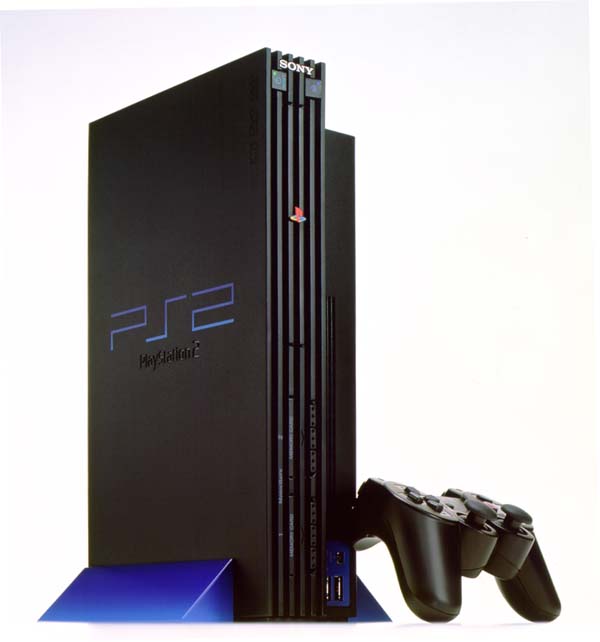
New low-price ‘compact’ PS2 to arrive in 2008

Redesigned model boasts built-in power supply; 25 per cent price drop likely.

Thought PlayStation 2 hardware sales were going to quietly disappear after the revenue frenzy of Christmas? Think again – Sony is preparing to introduce a new, cut-price model of the console in early 2008. This ‘compact’ PS2 will hit the US at just $99 in the New Year – a reduction of $30 from its current selling price of $129. If a similar percentage cut is introduced in the UK, retailers can expect to sell the revamped system for just £75 – or maybe lower.

The new version has a built-in power supply – unlike the current Slim model – allowing the platform holder to manufacture it more economically and sell it at the bargain price. The news will surely come as a blow to Sony rivals Nintendo and Microsoft, who have see sales of PS2 suffer somewhat due to the introduction of Wii and Xbox 360 in recent years.

PS2 this week celebrated its seventh anniversary, during which time it has sold over 120 million units worldwide. Yet this cut demonstrates Sony’s belief that the system’s market is far from exhausted.

Online building suppliers are on the watch...

Also buildingmarkets are experiencing competition of their 'internet-doubles'. So is the bouwmarktconcurrent.nl according to the consumer union 20% cheaper than the buildingmarkets. The virtual market says being able to deliver products very cheap because their stock, the expensive accomodation and the expensive marketingcampaigns are not necessary and their energycosts are very low. Brands like Makita, Kärcher are not cooperating with the online stores. According to Enno Riemersma of Metabo not much can be done against internetcompanies buying remaining stock of shops and offer them for knockdown prices.

Ook bouwmarkten ondervinden inmiddels concurrentie van hun ‘internet-doubles’. Zo kan de Bouwmarktconcurrent.nl zich volgens de Consumentenbond beroepen op 20% lagere prijzen dan de bouwmarkt. Deze virtuele bouwmarkt zegt zeer goedkoop te kunnen leveren omdat voorraad, dure huisvestingskosten en dure reclamecampagnes niet nodig zijn en de energiekosten laag zijn. Professionele bouwers kunnen gereedschap en hangen sluitwerk kopen via www.toolstation.nl. De site www.handig.nl zoekt de grenzen van de kostenbesparing op: de site is zeer sober vormgegeven en de communicatie verloopt alleen via e-mail.

Verschillende merken zijn zowel via internet als via de reguliere handel te verkrijgen. Dit is bijvoorbeeld het geval bij Makita en Kärcher. Makita biedt de internetaanbieders echter geen kortingen of toegevoegde waarde. Kärcher doet geen zaken met bedrijven die met prijzen stunten, omdat dit de professionele vakhandel schaadt. Volgens Enno Riemersma van Metabo kan men weinig doen tegen internetpartijen die restpartijen opkopen en aanbieden tegen dumpprijzen. Wanneer de eigen dealers hiertoe overgaan, kan men hoogstens eens een gesprek met ze voeren.

Source: Mix nr. 10

Are do-it-yourselfer not price conscious...?

Do-it-yourselfers are the most important customers of the building market. However their expenditures are not increasing, that is the conclusion of the Fediyama consumer study 2007. The budget is not seen as a barrier; 60% of the respondents is able to finance its expenditures, and 36% is even exceeding the foreseen budget. Only 29,30% is comparing prices, compared to 40% in 2005. Only 13% will buy the lowest priced product. Most consumers are prepared to spend more money to products that save time. And there is also the feeling that prices increased radically the last 10 years.

Doe-het-zelvers blijven de belangrijkste klanten van bouwmarkten. Hun uitgaven stijgen echter niet in waarde, zo blijkt uit de Fediyama-consumentenstudie van 2007. Het budget wordt niet als hindernis gezien; 60% van de respondenten kan moeiteloos zijn uitgaven financieren en 36% overschrijdt zelfs bij zijn DHZ-aankopen het voorziene budget. Nog maar 29,3% doet aan prijsvergelijking, tegenover 40% in 2005. Slechts 13% zal het laagst geprijsde product daadwerkelijk kopen. Consumenten zijn vooral bereid om meer geld te besteden aan tijdbesparende producten. Verder heerst het gevoel dat de prijzen de afgelopen 10 jaar radicaal zijn gestegen.

De Nederlandse consument is relatief weinig prijsbewust. Dat blijkt uit een onderzoek onder 45.000 consumenten in heel Europa. Voor de Nederlander is een winkel met een goedkoop imago al voldoende om hem het gevoel te geven dat hij prijsbewust inkoopt. Binnen de DHZ-markt is Praxis de goedkoopste winkel, terwijl Gamma het goedkoopste imago heeft. Op basis van de gemiddelde kassa-aanslag per product voor het totale assortiment in bouwmarkten (7,25 euro), ligt Gamma echter 5% lager en Praxis 2% hoger. De consument schat zelf de prijsverschillen tussen bouwmarkten op niet meer dan 1%.

Source: Mix nr 10

16.10.07

Again a price increase for natural gas in Belgium

Natural gas will increase in price, this price increase can run up to 250 euros!

The natural gas invoice will as of next year for some families increase with almost 250 euros. This is confirmed by Tom Vanden Borre of the federal regulator CREG. "Test-Aankoop" criticises this increase and says it becomes unbearable for the consumer.

Aardgas in België weer duurder : tot 250 euro duurder

De aardgasfactuur zal volgend jaar voor sommige gezinnen stijgen met maar liefst 250 euro. Dat bevestigt Tom Vanden Borre van de federale regulator CREG. Test-Aankoop noemt die prijsstijgingen ondraaglijk voor de consument.De CREG kondigde aan dat de tarieven van de distributienetbeheerders gevoelig zullen stijgen en dat de CREG daar weinig aan kan doen. De stijging zou voor de gemiddelde huishoudelijke verbruiker neerkomen op een stijging van de aardgasfactuur met 65 à 75 euro. Daarbovenop komt de stijging van de aardgasprijzen die Electrabel en SPE-Luminus eerder aankondigden. Voor Electrabel berekende de CREG de stijging op gemiddeld 17 procent of 172 euro per jaar. SPE-Luminus kondigde een verhoging aan met 6 procent."Dat betekent spijtig genoeg inderdaad dat de factuur tot 250 euro kan stijgen", bevestigt Vanden Borre.Elia-heffing afgeschaftDe andere delen van de factuur (heffingen/taksen en de hogedrukgasleidingen van Fluxys) compenseren de stijging niet, zo luidt het. De elektriciteitsfactuur bij de huishoudelijke gebruikers zal mogelijk minder stijgen dan de 20 tot 30 euro die de CREG aangeeft door de stijging van de distributienettarieven: in 2008 wordt in Vlaanderen immers de Elia-heffing afgeschaft en dat zal de eindafrekening enigszins verlichten.

Bron : HLN.be

Substantial price increase by Aldi

Aldi will substantially increase its price. Aldi announced the price increase for food products in Germany and the Netherlands. The Belgian branches will probably follow the same path. Colruyt doesn't exclude a price increase of 30%. The price increase is due to the increase of raw materials such as cereals, dairy and oils & fats (vegetable).

Belgische filialen volgen wellicht Nederlands voorbeeld. Aldi kondigt in Duitsland en Nederland massaal prijsstijgingen af voor voedingswaren. Ook België zal niet ontsnappen. Colruyt sluit niet uit dat sommige producten tot 30 procent duurder worden.

Aldi Duitsland maakte eind september op zijn website bekend dat circa 300 producten op een volledig basisgamma van 700 producten in prijs zullen stijgen. 50producten werden al effectief in prijs aangepast. In Nederland maakte Aldi afgelopen week in een advertentie en in de winkels een reeks prijsstijgingen bekend. De reden is telkens dezelfde: naast gestegen energieprijzen is er vooral sprake van soms 'extreme prijsstijgingen' bij drie hoofdcategorieën van grondstoffen: graan, melk (zuivel) en ten slotte oliën en vetten (plantaardige producten).Die grondstoffen worden in zoveel voedingswaren gebruikt dat er sprake is van prijsstijgingen bij een paar honderd basisproducten. Het gaat daarbij over koekjes, tot meelproducten, yoghurt, kazen, brood, bakolie... .

9.10.07

iPod Nano the most expensive in Brazil

When a brazilian wants to buy an iPod Nano he needs to pay almost 396, 61 dollar. In the U.S. or HongKong you pay only 149 and 148,12 dollar for the same iPod Nano.

Commsec, an Australian based company compared the price of an iPod Nano 4 GB in 55 countries around the world. After Brazil and Bulgaria, Argentina and Israël are at the top of the list. In those countries the buyer must pay above 300 dollar for the iPod. Remarkably; countries situated in South America and Eastern Europe are mostly on top of the list. Countries like Japan, Taiwan and Singapore are relative cheap for buying an iPod.

The cheapest place in Europe to buy an iPod is in Switzerland, there the music player only costs 194,34 dollar.

11.9.07

Apple lowers the price of the iPhone: is the the price elasticity well utilized?

Apple sold his 1 millionth iPhone. Steve Jobs is happy announcing: "One million iPhone's in 74 days, we needed 2 years to accomplish the same with the iPod". Selling 10 million iPhone's by the end of 2008 is the objective. Apple is looking for new customers with the help of a spectacular price cut. The iPhone was launched at 599 dollar, but since wednesday the phone is available for 399 dollar. Since this price cut Steve Jobs received more than hundreds angry e-mails of dissatisfied customers who paid the 599 dollar. Upon that he decided that Apple will refund 100 dollar to those angry customers. Jobs defended his decision with the argument that with the upcoming end of year festivities the price cut will help to persuade more people to buy the iPhone.

ePP comment: They call this price elasticity... would all the early adopters already have an iPhone? And what does this mean for the European launch?

Apple heeft intussen zijn miljoenste iPhone verkocht. "Een miljoen iPhone's in 74 dagen, met de iPod hadden we daar twee jaar voor nodig", juicht topman Steve Jobs in een mededeling. Tegen het einde van 2008 wil Apple tien miljoen iPhone's hebben verkocht. Apple wil nu een nieuwe golf klanten overhalen met een spectaculaire price cut. De iPhone werd twee maanden geleden gelanceerd voor 599 dollar, maar is sinds woensdag te koop voor 399 dollar. Apple-topman Steve Jobs kreeg na de prijsverlaging honderden mails van boze klanten die het volle pond betaald hadden en besloot daarom tot een compensatie van 100 dollar voor die mensen.Jobs verdedigt de drastische prijsdaling met het argument dat de eindejaarsfeesten er aankomen en een lagere prijs zou veel meer mensen overhalen om de iPhone te kopen.

Prijselasticiteit heet dat…. Zouden alle early adoptors al over de streep zijn ? En wat betekent dit voor de Europese launch ?

6.9.07

Apple Lowers Price Of 8GB IPhone To $399 For Holiday Season

Wednesday, Apple Inc. reported that it lowered the price of its iPhone model with 8GB of storage to $399 from the earlier price of $599. The company noted that the move is part of making iPhone affordable for more customers in the holiday season. Apple expects to sell its one-millionth iPhone before the end of the current month. The iPhone model with 8GB storage will be available for $399 in the US through the company's retail and online stores and AT&T retail stores.

26.7.07

KPN lowers substantially prices for television products

Starting from august 2007 the prices of KPN's television products will substantially be lowered. For 'Digitenne' the price decrease will be by 30%, because of this 'Digitenne' will only cost € 6,95 /month instead of € 9,95. As well 'Interactieve TV' (previously called 'Mine TV') will be cheaper in the future. The base pack of approximately 50 television- and 75 radio stations will be costing € 9,95 / month.

Vanaf begin augustus 2007 gaat de prijs van KPN televisieproducten fors omlaag. Digitenne wordt 30% goedkoper en kost voortaan slechts €6,95 per maand in plaats van €9,95. Ook Interactieve TV (voorheen Mine TV) wordt goedkoper. Het basispakket van ca. 50 tv- en 75 radiozenders gaat €9,95 per maand kosten.

10.7.07

A brands profit from the psychological smaller price distance because of the euro

Wertenbroch, Soman and Chattopadhyay are concluding out of a recent research, around the symbolism of absolute numbers in the price perception, a striking conclusion. Because of the introduction of the Euro the perceived price difference between A brands and house brands decreased. Because of this psychological effect A brands could increase the real price difference unnoticed, and this had a positive effect on the market shares of the A brands in the Euro zone.

Wertenbroch, Soman en Chattopadhyay trekken in een recent onderzoek rondom de symboliek van absolute getallen in de prijsperceptie een opmerkelijke conclusie. Aangezien met de introductie van de Euro het waargenomen prijsverschil tussen A-merken en huismerken is afgenomen – en A-merken daardoor het reële prijsverschil onopgemerkt konden vergroten – heeft dit een sterk positief effect gehad op de marktaandelen van A-merken in de Euro-zone.

Bron : Wertenbroch, K., Soman, D., Chattopadhyay, A. (2007), On the perceived value of money: the reference dependence of currency numerosity effects. Journal of Consumer Research, vol. 34, no.1, p.1-10.

14.6.07

Not all free daily papers survive...

The free German business newspaper 'Business News' will be published for the last time this week. The daily free newspaper lasted less than 1 year and is following the free newspaper 'Sportzeitung', that ceased being published one month ago. 'Business News' was published by the German business paper Handelsblatt.

De gratis Duitse zakenkrant Business News verschijnt deze week voor het laatst, meldt het betaalde Belgische dagblad De Tijd. Daarmee heeft het gratis dagblad het minder dan een jaar volgehouden en volgt het de gratis sportkrant Sportzeitung, die anderhalve maand geleden ter ziele ging. Business News werd uitgegeven door de betaalde Duitse zakenkrant Handelsblatt.Zowel Business News als Sportzeitung is naar eigen zeggen ten onder gegaan aan een gebrek aan inkomsten uit advertenties. Dat de Duitse adverteerders in tegenstelling tot tal van andere Noord-Europese landen niet in de rij staan voor gratis kranten, is hoogstwaarschijnlijk het gevolg van koudwatervrees bij reclame- en mediabureaus, meldt de Belgische krant.

Bron: Molblog

9.6.07

Price of tomatoes under pressure

In the Netherlands there are too many tomato varieties on the market. According to Mr. Van Dijk, the chairman of the cooperation Fresq (second largest cooperation in the Benelux after The Greenery), there have been too many experiments with varieties such as honey tomatoes, cherry tomatoes and tiger tomatoes. The consumer is not waiting for new types of tomatoes and dropped out.

Besides the prices are quite under some pressure. The price dropped because of the large supply of tomatoes coming from Spain.

In Nederland verschijnen blijkbaar teveel tomatenvariaties op de markt. Volgens Dhr. Van Dijk, voorzitter van de coöperatie Fresq (de tweede grootste coöperatieve in Benelux na The Greenery), zijn er teveel experimenten geweest zoals honingtomaten, cherry- en tijgertomaten. De consument heeft echter afgehaakt, en zit blijkbaar niet te wachten op nieuwe vormen en kleuren. Bovendien staan de prijzen flink onder druk. De prijs is ver weggezakt door een groot aanbod vanuit Spanje, terwijl ook het warmere weer en de schaalvergroting bij telers de productie in Nederland heeft opgevoerd. Anderzijds krijgt de sector ook weer meer subsidies vanuit Brussel voor de begeleiding van de marktordening : van € 8 mln vorig jaar naar € 12 mln volgend jaar ( …)

Bron : Financieel Dagblad

8.6.07

Europe brings an end to deceiving flight prices

The European ministers of traffic are close to an agreement that forces airplane companies to transparency in ticket rates. Flying for € 1,00 will be over, from now on companies will only be allowed to state the rate that includes all extra charges.

De Europese ministers van Verkeer staan dicht bij een akkoord dat vliegtuigmaatschappijen verplicht tot transparantie van de ticketprijzen. Vliegen voor ‘één euro’ is dan verleden tijd. Prijsstunters worden straks in Europa verplicht louter nog ticketprijzen te publiceren waarin alle kosten zijn opgenomen. Daarmee moet een einde komen aan schreeuwerige advertenties met spotgoedkope en soms ‘gratis’ aangeboden vliegtickets, waarbij luchthavenbelastingen en andere heffingen worden weggemoffeld.

bron: De Financiële Telegraaf